
What is a smart home, and what does it actually do?
A smart home is one where lighting, air-conditioning, security, audio-visual and energy run as a single system instead of as separate gadgets you control one app at a time.
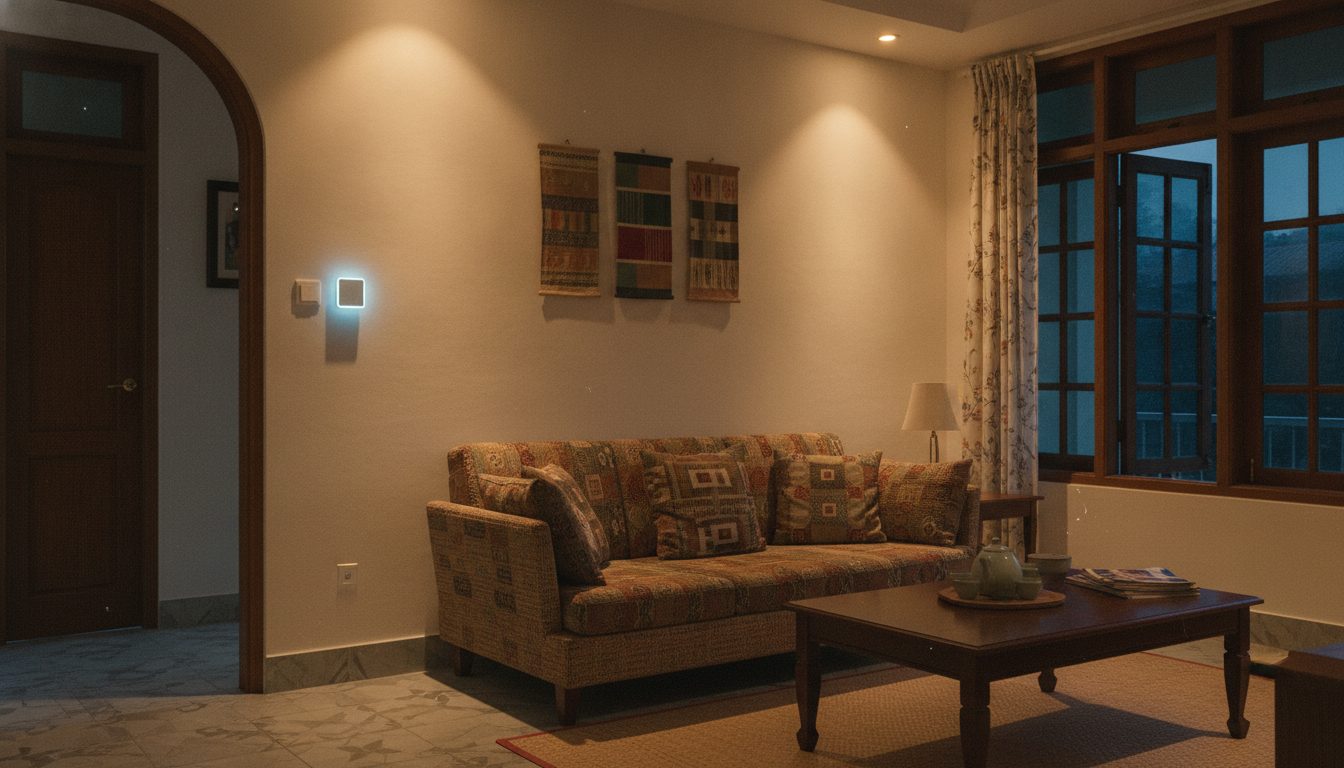
What makes a home smart rather than just connected?
A home is smart when the subsystems talk to each other. Buying a connected bulb, a connected camera and a connected air-conditioner gives you three apps and three habits to remember. Tekovate builds the six subsystems onto one system so a single action can move all of them at once.
The practical test is whether one instruction changes more than one thing. If leaving the house dims the lights, closes the curtains, arms the door sensors and sets the air-conditioning to an economy temperature, the home is automated. If it only switches one bulb, it is a connected bulb.
Which parts of a home can be automated?
Tekovate automates six areas: intelligent lighting, climate and air, security and access, audio-visual, energy management, and voice and app control. Lighting is where most homes in Melaka start, because it is the cheapest subsystem to add and the one residents notice every day.
- Intelligent Lighting - Scenes, schedules and presence sensing so lights match what the room is being used for instead of being switched by hand.
- Climate & Air - Automated air-conditioning, ventilation and air quality, zoned room by room.
- Security & Access - Door access, cameras and presence-aware arming that follows whether anyone is home.
- Audio-Visual - Multi-room audio and home cinema that join the same system as the lights and curtains.
- Energy Management - Monitoring and managing household energy so the savings are visible rather than assumed.
- Voice & App Control - One app and the voice assistant you already use, rather than a different app per device.
Does a smart home stop working when the internet goes down?
No. Most of the system keeps working when the internet drops. Only remote control from outside the house stops until the connection is back. Switches, sensors and schedules run locally, so the house behaves normally during an outage. This is a direct consequence of Tekovate building on Zigbee and Matter rather than on cloud-only devices.
Do you have to automate the whole house at once?
No. Planning the whole home first is best, but starting with a single room and expanding later is fine. Because the system is built on open protocols, a room added in two years joins the same system rather than starting a second one. Tekovate designs Melaka homes to be extended exactly this way.
Related questions
Quick answers on this topic
Tekovate designs and installs smart-home automation in Melaka. Lighting, climate, security, audio-visual, energy and app control are built as one system rather than as separate devices.
Yes. A Tekovate system keeps most of its functions when the internet drops, in any Malaysian home. Only remote control from outside the house stops until the connection is back.
Yes. Tekovate recommends planning the whole home first, but a single room is a valid start. That is how most Melaka homes phase it, and later rooms join the same system.
Get a straight answer about your own home
A site visit, then a free design and quotation within 2-3 days.